Name utai baka batang (what’s that.. feels like a log) Iban to English translation.
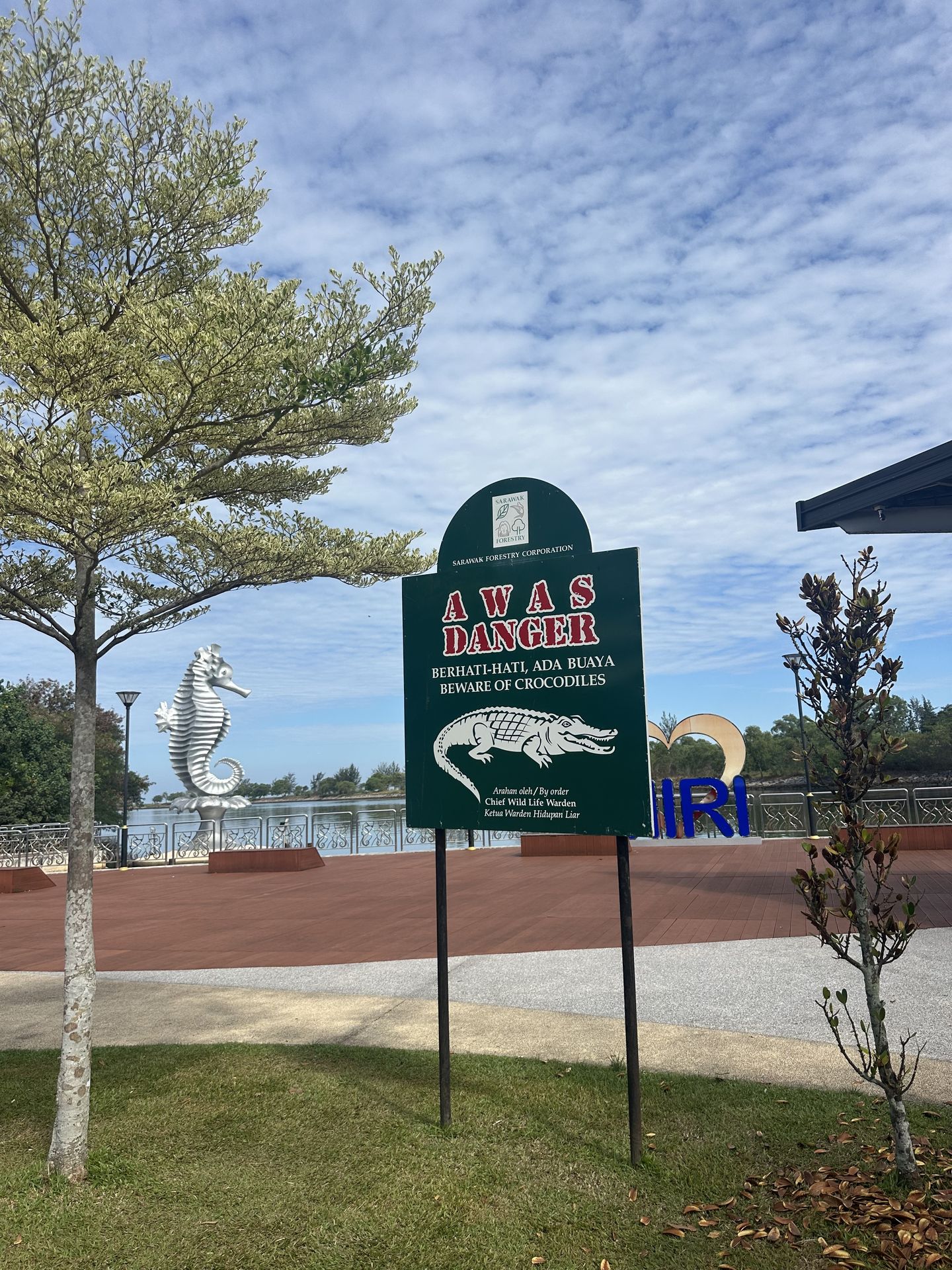
There are many famous animals in Borneo, but there is one animal more feared than others: the crocodile. I’ve seen the AWAS (danger) crocodile signs along the riverbanks. While walking along the river, I have noticed logs passing by that made my heartbeat increase. I was convinced it was a crocodile. But you know what? I’ve never seen one in the wild since I moved here early this year.
Having said that, I keep on reading an increasing number of stories about crocodile attacks in Sarawak.
Crocodile attacks are rising across Borneo, particularly in Sarawak, due to a rapidly rebounding crocodile population increasing 85.19% from 2015 to 2025 and expanding human activity near rivers. Between 2023 and 2025, Sarawak recorded 33 crocodile attacks, causing 22 deaths. In the first half of 2026 alone, nine attacks were reported, with five fatalities. (South China Morning Post)
Sarawak has many legends and folk stories, and one of the first stories I heard when I moved to Borneo was the story about Bujang Senang, who attained notoriety for the large number of human casualties he caused and for his capacity to evade capture.
The Legend of Bujang Senang
Legend has it that around 200 years ago, Simalungun (Lungu), a famous Iban warrior, had a power that made him immune to weapons. However, with this superpower, he also had one Achilles' heel. Only his wife knew, and enemies kidnapped and killed her. This caused a terrible battle. During the fight, the enemies observed that weapons harmed Lungu when he was standing in the river, hence they found out his vulnerability: it was water. This made it easier to kill Lungu and drop both his and his wife’s corpses in the river.
Later that night, a shaman from Lungu’s longhouse had a dream where Lungu appeared. Lungu told the shaman about his wish for revenge. The shaman travelled to the Lupar River, where the corpse was dropped, and with the help of water spirits, they turned his corpse into a giant crocodile as big as a bus, with a white stripe on his back. From that day on, this crocodile started seeking revenge on his enemies and their descendants who live along the river.
The crocodile was called Bujang Senang (Bujang meaning ‘champ’, ‘great person’) and Senang (referring to the Senang River, a branch of the Lupar River, where the crocodile is believed to have resided). It was stated that Bujang Senang was killed in 1992 with 40 hits from 10cm-long nails.
Different books and articles show slightly different versions of the story. In another version, Lungu’s wife told the river people about Lungu’s vulnerability, after which the enemies dragged him into the river. Besides this legend, several people have warned me not to say the C-word when at the river. It might attract them.
Some people remain skeptical about the folklore and say that crocodiles are simply hungry and hunt for food. Others are convinced that Bujang Senang is still out there waiting for the right time to strike again.
What’s the truth? It seems to be that Bujang Senang stories are still going around, and the famous crocodile even has its own replica at Sri Aman waterfront. So maybe it doesn’t matter what the truth is; it’s the story that matters, and they keep on being told generation after generation.
References:
- Man-eating crocodiles of Borneo. James Ritchie with Johnson Jong, 2002
- The Legend of ‘Bujang Senang’, the Formidable Crocodile of Batang Lupar https://tropaws.wordpress.com/2020/10/02/the-legend-of-bujang-senang-the-formidable-crocodile-of-batang-lupar/
- Image of crocodile with fighters from Libur